In summer, a completely dead AC needs immediate attention. Before you call, try these quick checks — they may save you the wait.
Before Calling — Quick Self-Check
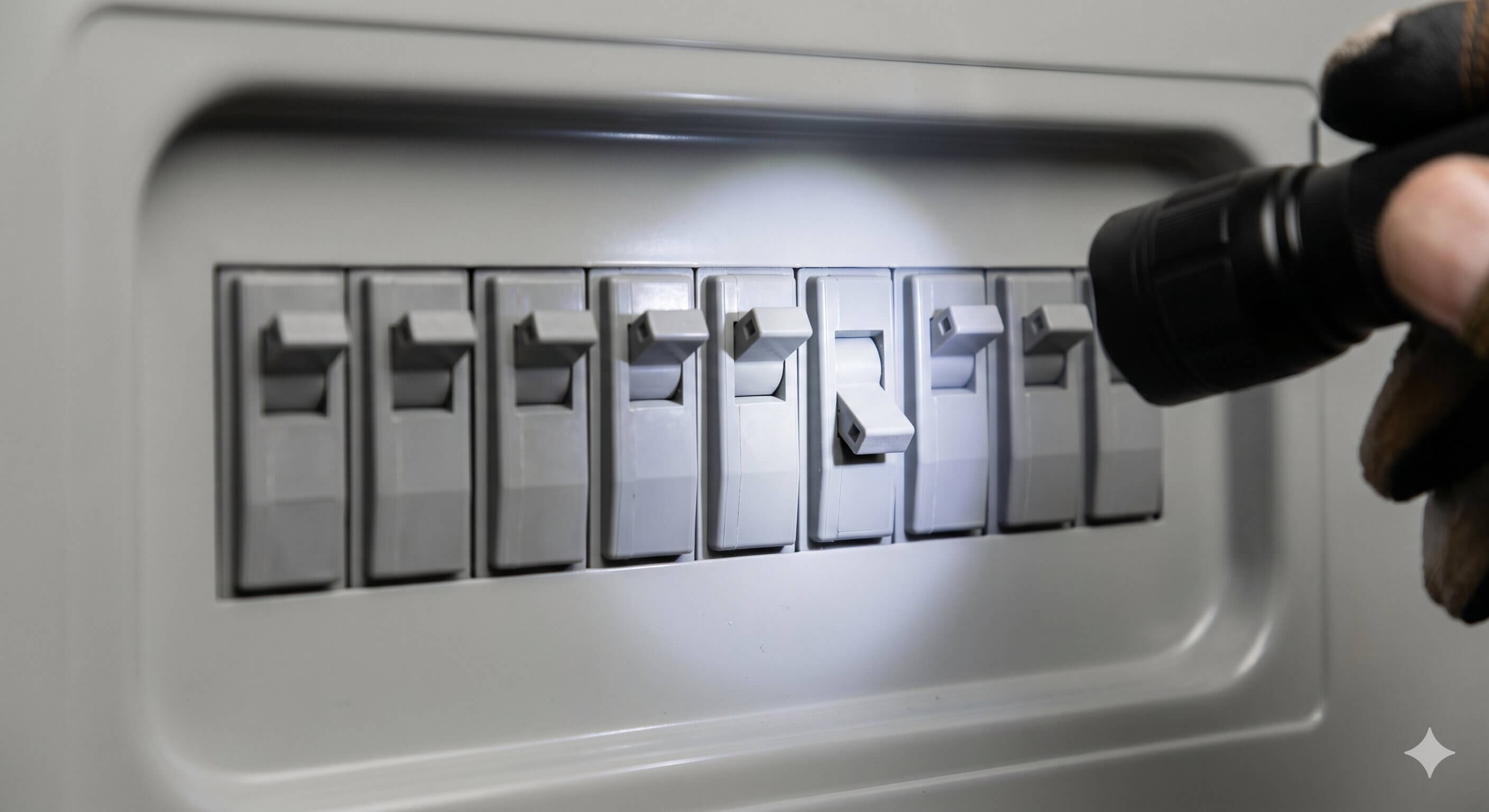
Check the circuit breaker (AC fuse) in your electrical panel
Confirm the power socket or supply cable is intact
Try fresh batteries in the remote
Try switching the AC on from the direct buttons on the indoor unit
Common Issue in Peak Khamis Mushait Summer
On the hottest days (July–August) in Khamis Mushait, the electricity grid is under heavy load from collective peak demand. Your AC may not start due to low supply voltage rather than a unit fault. A voltmeter confirms this in seconds — our technicians check this first.
Most Common Technical Causes
PCB (Control Board) Failure
The most common cause after initial checks. PCBs fail due to voltage spikes. In Abha, voltage fluctuations are more frequent in higher-altitude districts further from the main grid infrastructure.
Capacitor Failure
The capacitor starts the motor. When it fails, the motor cannot start — you may hear a faint hum or nothing at all. In Jazan, coastal humidity accelerates capacitor corrosion and shortens service life.
Thermostat Fault
The thermostat sends the start signal to the unit. A faulty thermostat sends no signal. Key indicator: the AC was working and suddenly stopped at a specific temperature with no obvious cause.
Case — Commercial Building, Jazan
A central AC in a Jazan commercial building stopped completely mid-working day. Inspection revealed a burnt capacitor from a power surge following a supply interruption and restoration. We replaced the capacitor and installed a surge protector. Unit was back online within 50 minutes.
Frequently Asked Questions
Is a repeatedly tripping breaker an emergency?
Yes — a breaker that trips every time the AC switches on indicates a serious electrical fault. Do not keep resetting it manually. Call us immediately.
Does the manufacturer warranty cover these faults?
Depends on unit age and cause. If within warranty period, we will help you coordinate with the authorised distributor.
What does capacitor replacement cost?
Capacitor replacement runs SAR 150–350 depending on size — one of the fastest and most affordable AC repairs.
What should I check myself before calling you?
Three things, in order: the breaker in the panel (it may have tripped); the batteries in the remote or thermostat; and the isolator switch near the outdoor unit. Those three resolve a meaningful share of call-outs without a visit.
The AC is completely unresponsive — no sound, no lights.
Most likely a loss of power: a tripped breaker, a blown fuse, or an isolator switched off. One commonly missed cause: the float switch in the drain pan. When the pan fills, that switch cuts power deliberately — to protect your ceiling from water.
I hear a hum but nothing turns. What does that mean?
That's the classic sign of a failed run capacitor. The compressor or fan is trying to start without the electrical kick it needs. Continuing to try in that state overheats the windings and can destroy the compressor — switch the unit off.
The breaker trips every time I switch the AC on. Should I reset it?
Don't reset it more than once. The breaker is tripping because it sees excess current or an earth fault — either a compressor on its way out or an insulation failure. Repeatedly resetting it is a genuine fire risk, not just an inconvenience.
Can the thermostat stop the AC from starting?
Yes. A failed sensor, dead batteries, or loose wiring behind the thermostat will all prevent the start signal. Quick test: set it to the lowest temperature and listen for the relay click. No click points to the thermostat or its supply.
The power cut out, came back, and now the AC won't run. Why?
Many units have a compressor protection delay of three to five minutes that prevents an immediate restart after power returns — this is normal and intentional. If it lasts beyond ten minutes, the control board may have been affected by a voltage surge.
Does your AC need attention?
Call us now for a free assessment and instant quote